
Independent Dealer Vehicle Sourcing Strategies That Scale Past 100 Units Monthly
Most independent dealers treat private-party acquisition as a supplemental tactic, something to try when auction inventory gets tight. The data says that thinking is costing them $800 to $1,500 per unit, every single month.
With used-vehicle supply now normalized near 16 million units annually, the dealers who will win in 2026 are not the ones who source from the most channels. They are the ones who build the most efficient acquisition machine for each channel.
Independent dealer vehicle sourcing strategies that actually scale start with private-party, and they start with owned infrastructure.
Quick Summary
- Private-party acquisition saves $800–$1,500 per unit compared to auction buying when a proper funnel and intake system are in place.
- First-party lead funnels give dealers full data ownership and cost a fraction of per-lead third-party platforms.
- AccuTrade API integration eliminates manual pricing delays, the single biggest reason dealers lose private-party leads to faster competitors.
- Lease returns are rebounding in 2026, creating a systematic acquisition opportunity for dealers who build intake infrastructure now.
- Treating private-party sourcing as a dedicated channel with its own KPIs, funnel, and staffing model is what separates dealers acquiring 100+ units monthly from those stuck at 20–30.
Table of Contents
- Why the 2026 Market Demands a New Sourcing Playbook
- Private-Party Acquisition vs. Auction Buying: The Unit Economics You Need to See
- Building a First-Party Sourcing Funnel That Runs Without You
- Lease Returns, Conquest Sourcing, and Scaling Past 100 Units Monthly
- Key Takeaways
- FAQ
Why the 2026 Market Demands a New Sourcing Playbook
The inventory crisis mentality that defined 2021 and 2022 is functionally obsolete. Used-vehicle supply has stabilized near 16 million units annually, which means scarcity is no longer the problem. Margin compression is. Dealers still applying crisis-era buying tactics, overpaying at auction to secure any available unit, are bleeding gross on every deal without fully accounting for it.
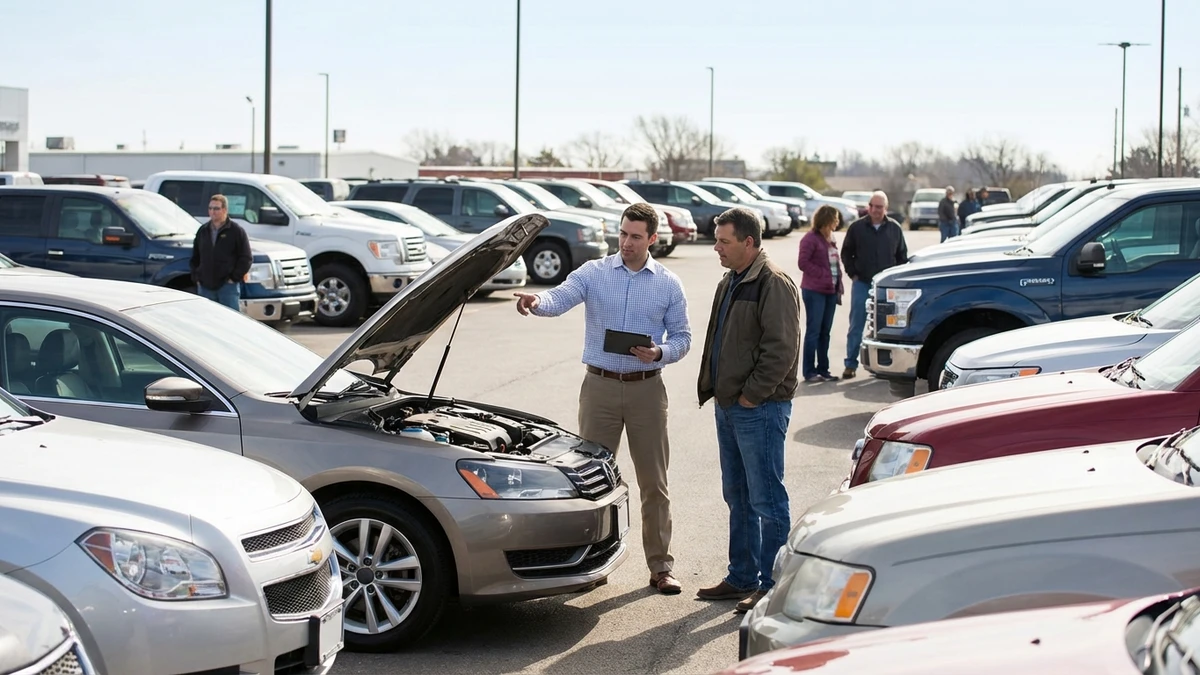
The 2026 lease return rebound changes the opportunity set for prepared dealers. After years of suppressed lease originations driving NIADA-reported declines in off-lease supply, new data indicates a meaningful increase in lease returns entering the used-car market this year.
These vehicles tend to be late-model, well-documented, and priced within a predictable range, making them ideal candidates for systematic private-party acquisition before they cycle back through captive finance arms or franchise trade-in lanes.
The tariff wildcard adds another layer of urgency. With ongoing federal trade policy uncertainty affecting new-vehicle import pricing, consumers are holding onto vehicles longer or reconsidering purchases, which creates more motivated private sellers in the used market.
Independent dealers who own their sourcing pipeline through first-party digital assets will be insulated from the wholesale price volatility that follows every policy shift. Those still dependent on auction lanes will absorb that volatility directly into their cost structure.
The core problem is structural. Most independent dealers still rely on auction lanes and third-party lead aggregators as their primary used-car sourcing channels. Both are high-cost, low-control options that erode margin in a market that now rewards efficiency above all else.
Private-Party Acquisition vs. Auction Buying: The Unit Economics You Need to See
The math here is not subtle. Here is what the true cost-per-acquisition looks like across the three most common sourcing channels:
| Sourcing Channel | Avg. Cost Per Unit | Data Ownership | Pricing Control | Speed to Acquisition | Scalable to 100+/mo |
|---|---|---|---|---|---|
| Auction Lane | $1,000–$1,800 | None | Low | 3–7 days | Yes, but margin-negative |
| Third-Party Lead Aggregators | $400–$900 per lead | None | Low | 1–3 days | No, cost scales with volume |
| First-Party Private-Party Funnel | $200–$450 | Full | High | Same day | Yes, fixed infrastructure cost |
A dealer acquiring 50 units per month through auction at an all-in cost of $1,200 per unit, including buy fees, transport, and reconditioning premium, spends $60,000 monthly on sourcing alone. The same 50 units through a private-party funnel with AI intake and automated appraisal tools runs closer to $17,500.
Annualized, that is roughly $510,000 in recovered margin, before accounting for the front-end gross difference on vehicles bought at market rather than above it.
The hidden cost most dealers overlook is the per-lead model. Third-party aggregators like CarGurus Instant Cash Offer and similar platforms charge per lead and retain the consumer relationship. Dealers pay repeatedly to access the same audience with no equity built, no data retained, and no ability to remarket. Every dollar spent there funds someone else's audience, not yours.
Pro Tip: When evaluating your current sourcing costs, pull your last 90 days of auction purchases and add buy fees, transport, and actual recon costs per unit, not estimated recon. Most dealers find their true auction cost-per-unit is 20–30% higher than they assumed at the time of the buying decision. A vehicle auction calculator makes this comparison fast and concrete.
Building a First-Party Sourcing Funnel That Runs Without You
A first-party funnel is structurally different from dropping a "We Buy Cars" form on your homepage. Think of the difference between a vending machine and a cashier: one runs continuously without supervision, the other stops working the moment someone steps away.
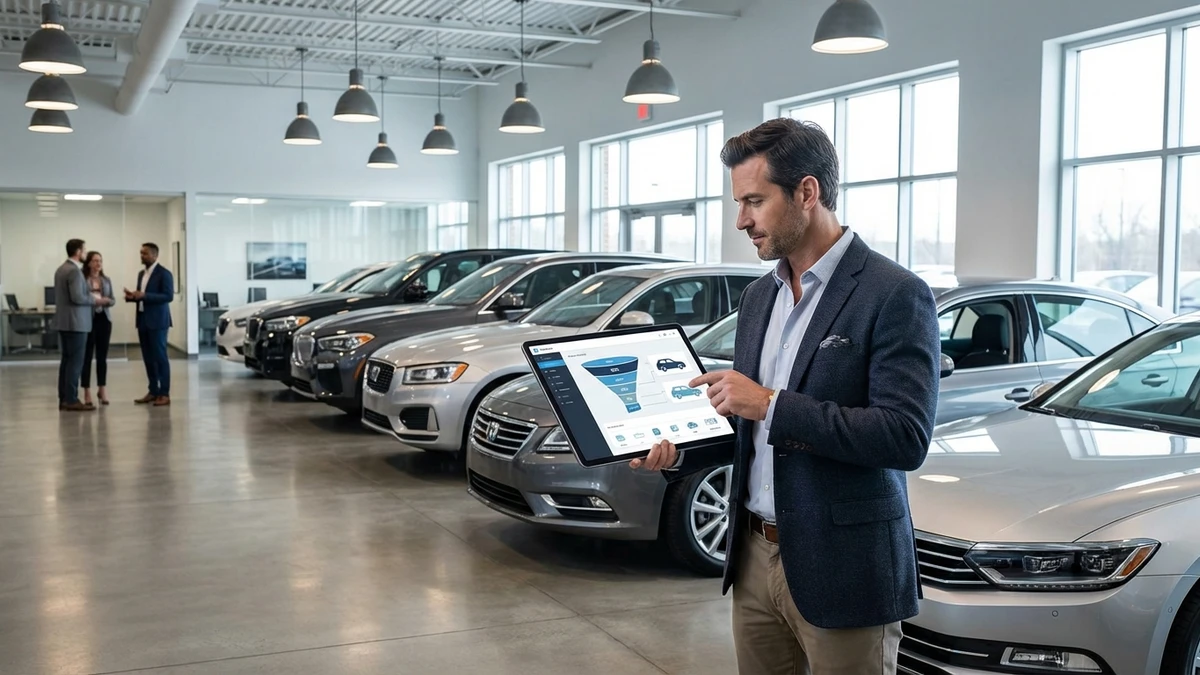
A true first-party funnel captures the consumer on dealer-owned digital assets, routes data into a CRM the dealer controls, and triggers automated follow-up without a human in the loop for initial qualification. No middleman, no shared leads, no recurring per-lead fees that scale against you as volume grows.
The three components that make a high-volume private-party acquisition funnel work are:
- A conversion-optimized landing page with an instant offer mechanism. The page exists for one purpose: to convert a private seller into a submitted lead with vehicle details. It should load fast, work on mobile, and deliver a preliminary offer range within the session, not after a callback.
- An AI intake system that qualifies and nurtures leads 24/7. Most private-party leads come in outside business hours. An AI intake system handles initial qualification, responds to condition questions, and books appraisal appointments automatically, without a staff member touching the lead until it is appointment-ready.
- AccuTrade API integration for real-time appraisal offers. The moment a consumer submits their VIN and condition details, the AccuTrade API pulls live market data and generates a defensible, market-accurate offer. This eliminates the manual pricing step that causes most dealers to lose private-party leads to competitors who respond in minutes rather than days.
Staffing a buying center at 100–400 units per month does not require a large team when the intake layer is automated. A workable model includes one dedicated acquisition manager, an AI intake system handling initial qualification and appointment setting, and a reconditioning liaison coordinating throughput. The AI layer is what makes high volume achievable without proportionally scaling headcount.
Vehicquire builds exactly this system for independent dealers, buying centers, and multi-rooftop groups. As the only agency built 100% for private-party vehicle acquisition using custom AccuTrade API technology and first-party funnels, the entire infrastructure is purpose-built for this use case, not adapted from a general digital marketing platform.
and how this approach was developed specifically for high-volume private-party acquisition.
Lease Returns, Conquest Sourcing, and Scaling Past 100 Units Monthly
The 2026 lease return rebound is a time-limited acquisition window. Dealers who move now can intercept off-lease vehicles before they cycle back to franchise trade-in lanes or captive finance remarketing programs.
The playbook is straightforward: build targeted digital campaigns aimed at consumers 60 to 90 days from lease maturity, use first-party data to identify in-market sellers, and deploy an instant offer tool to make acquisition frictionless at the moment of decision.
Conquest sourcing rounds out the volume picture for independent dealers competing against franchise groups. Three tactics that consistently produce private-party volume without auction dependency:
- Targeted direct mail to high-equity vehicle owners. Using first-party data and equity mining tools, dealers can identify households where the vehicle is likely paid off or nearly paid off and the owner is statistically likely to sell within six months.
- Social media acquisition campaigns. Paid social campaigns targeting local consumers with specific vehicle ownership signals drive private sellers into a dealer-owned funnel rather than a third-party platform.
- Service loaner buybacks and service bay sourcing. Consumers already in your service lane have a verified relationship with your store. A well-timed, accurate offer at the point of service converts at a higher rate than cold outreach.
ties the offer math together. By calculating what a given unit would cost at auction, including buy fees, transport, and estimated recon, and working backward from that number, dealers can set a private-party offer ceiling that is competitive enough to win the vehicle while still protecting front-end gross.
This prevents the common mistake of making emotional offers on private-party units that end up costing more than the auction alternative.
Effective independent dealer vehicle sourcing strategies that scale past 100 units monthly share one common trait: private-party acquisition is treated as a dedicated channel with its own funnel, intake system, and KPIs, not bolted onto existing processes as an afterthought.
Dealers who build that infrastructure now, before auction costs climb further and lease return competition intensifies, will have a structural cost advantage their competitors cannot easily replicate. If a purpose-built acquisition system is on your 2026 roadmap, free strategy assessments are available now. com) before your market fills in.
Key Takeaways
- Private-party acquisition is the highest-margin sourcing channel available to independent dealers, but only when treated as a dedicated operation with its own funnel, intake process, and performance metrics.
- First-party lead funnels cost $200–$450 per acquisition compared to $1,000–$1,800 per unit through auction lanes, and they give dealers full control over data, pricing, and follow-up.
- AccuTrade API integration removes manual pricing friction, allowing dealers to respond to private-party leads in minutes rather than days, the single biggest driver of lost acquisition opportunities.
- Lease returns are rebounding in 2026 after years of suppressed off-lease supply. Dealers who build systematic intake processes now will capture this inventory before competitors react.
- The unit economics favor private-party sourcing by $800–$1,500 per unit when a proper funnel and AI intake system are in place, a difference that compounds materially at 100+ units per month.
FAQ
How do independent dealers source 100+ used vehicles per month without relying on auctions?
The most scalable path is a dedicated private-party acquisition funnel with AI intake and automated appraisal tools.
Dealers who build owned digital assets that attract private sellers, rather than competing for the same auction inventory as every other dealer in their market, can consistently hit 100–400 units monthly at a lower cost per acquisition.
The key is treating private-party sourcing as its own channel with dedicated infrastructure, not as a backup when auction inventory is thin.
What is the real ROI difference between private-party acquisition and auction buying?
When all costs are factored in, including buy fees, transport, reconditioning premium, and time, auction sourcing typically runs $1,000–$1,800 per unit. A well-structured private-party funnel with AI intake and AccuTrade API pricing can reduce that to $200–$450 per acquisition. At 50 units per month, that difference exceeds $500,000 annually in recovered margin.
Why should I build my own lead funnel instead of buying leads from a third-party platform?
Third-party platforms own the consumer relationship and charge you repeatedly for access to the same audience. A first-party funnel means you own the data, control the offer, and pay a fixed infrastructure cost rather than a per-lead fee that scales against you as volume grows.
Over 12 months, the compounding cost difference between a per-lead model and an owned funnel is substantial for any dealer sourcing more than 30 units per month.
How does AccuTrade API integration improve private-party vehicle sourcing?
AccuTrade API pulls real-time market data to generate accurate, defensible appraisal offers the moment a consumer submits their vehicle details. This eliminates the manual pricing step that causes most dealers to lose private-party leads to competitors who respond faster. Speed of offer is consistently the top factor private sellers cite when choosing which dealer to work with.
How should an independent dealer staff a buying center for high-volume private-party acquisition?
A lean model that works at 100+ units monthly typically includes one dedicated acquisition manager, an AI intake system handling initial lead qualification and appointment setting, and a reconditioning liaison managing throughput. The AI intake layer is what makes high volume achievable without proportionally scaling headcount.
Adding staff before adding automation is the most common and most expensive mistake dealers make when trying to grow their buying center.