Dealerships run their buying centers backwards by tracking retail sales numbers to measure inventory sourcing. This completely ignores the mechanics of buying cars directly from the public. Franchise dealers and multi-rooftop groups face intense margin compression in 2026.
Tracking the right vehicle acquisition metrics and KPIs for dealerships separates profitable buying centers from those losing market share. Vehicquire is the only agency built 100 percent for private-party vehicle acquisition using custom AccuTrade API technology and first-party funnels.
Standard Sales Dashboards Mask Your Buying Center Leaks
Most dealership marketing playbooks focus heavily on retail outcomes. Running facebook ads for car dealerships often yields a cost per vehicle retailed between $250 and $700 according to AutoAlert. Show-to-sale rates hover around 41 percent for new vehicles. These numbers matter for the showroom floor but offer zero visibility into how efficiently your buying center gets inventory.
Measuring a dedicated acquisition team with retail sales KPIs is like grading a service department on test drives. The two operations require completely different scorecards.
Kelley Blue Book reported an average new-vehicle transaction price of $49,461 in April 2026. This consumer affordability crunch continues to drive massive demand for used inventory. Dealerships must treat vehicle acquisition as a distinct and specialized pipeline.
Relying solely on days on lot or front-end gross profit per unit tells you how well a car sold. It hides the operational leaks in how that car was sourced. You need a dedicated framework to measure the upstream process.
What Are the Right Vehicle Acquisition Metrics and KPIs for Dealerships?
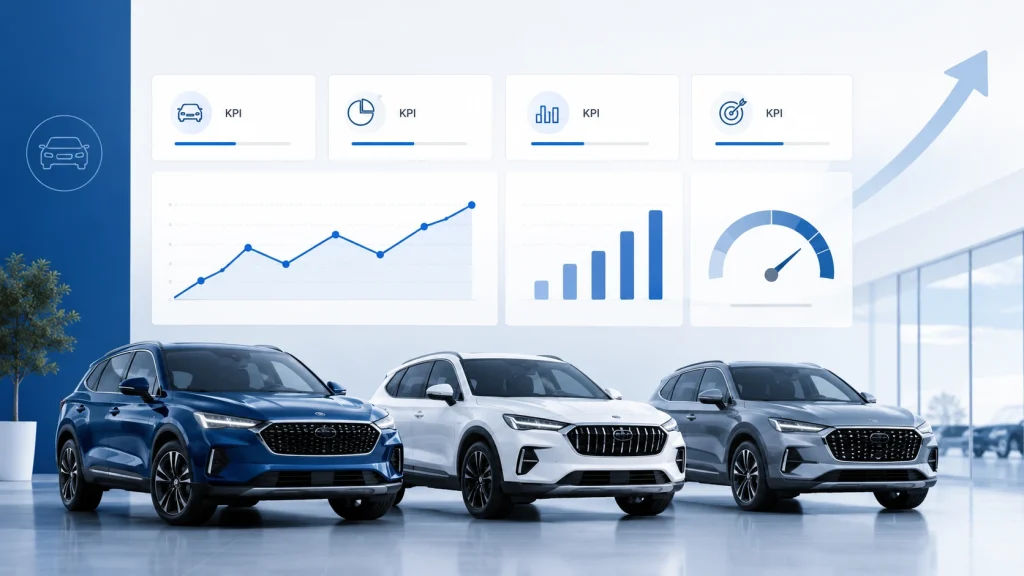
Reading vehicle acquisition marketing insights reveals that modern operations analytics recommend a North Star model for tracking performance. This features three to four primary metrics supported by a handful of diagnostic indicators. The ultimate North Star for a buying center is Cost Per Acquired Unit.
The average digital cost per lead for automotive search campaigns sits around $38.86. A low cost per lead means nothing if those inquiries never show up for an appraisal. You must track the full journey from lead to contact. This includes monitoring appraisal sets, appointments shown, offers made, and vehicles acquired. Running google ads for car dealerships requires this level of tracking to ensure your ad spend actually buys cars.
Track the Appraisal-to-Acquisition Conversion Rate
The appraisal-to-acquisition conversion rate tells you exactly how many in-person evaluations turn into purchased inventory. It highlights the effectiveness of your appraisers. This metric also reveals the competitiveness of your preliminary offers.
I have audited dozens of buying centers and consistently see them struggle with low conversion because their initial automated offers misalign with local market realities. A highly optimized buying center should aim to acquire 25 to 35 percent of the vehicles they physically appraise, so adjust your pricing strategy if you fall below 20 percent.
Measure Spread Versus AccuTrade Valuation
You also need to measure the spread versus AccuTrade valuation at purchase. Tracking the percentage of acquired vehicles bought within your defined buy-box ensures your team gets profitable metal without overpaying to hit volume targets. Strict adherence to a valuation spread protects your margins before the vehicle ever reaches reconditioning.
Stop Guessing and Measure Your First-Party Funnel Health
Third-party lead providers often deliver shared data that inflates your CRM with dead ends. Shifting to First-Party Lead Funnels requires tracking data health metrics like match rate, consent rate, and form abandonment reasons. This approach gives you total control over the seller experience. Shifting to this model often involves using automotive video marketing to build trust with local sellers.
AI intake systems fundamentally change how dealerships process private-party inquiries. You should monitor AI-specific metrics such as data completeness, valuation variance, and response time SLAs. This ensures sellers get immediate and accurate engagement. Our CarHarvest AI – vehicle acquisition program tracks these exact data points to keep your pipeline full.
Time-to-offer is a massive differentiator in 2026. If your metrics show a lag of several hours between a seller submitting their VIN and receiving a preliminary offer, you are losing acquisitions. Competitors with automated workflows will beat you to the purchase.
Monitoring these granular funnel metrics helps buying center managers pinpoint exactly where sellers drop off. Fixing a low appointment-shown rate might require adjusting your automated follow-up cadence rather than spending more on paid traffic for vehicle marketing.
It rarely means you need to increase your advertising budget. Vehicquire eliminates these blind spots by tracking every interaction from the initial click to the final appraisal.
Upstream Sourcing Dictates Your Downstream Gross Profit
The ultimate test of your vehicle acquisition metrics and KPIs for dealerships is how they impact the bottom line. Vehicles sourced directly from consumers consistently yield better margins and faster turn times than those bought at auction. Controlling your cost-to-market is the only way to capture growth as the global used car market expands to $2,080.27 billion by 2034.
Segment Your Sourcing Data
You should segment your retail and wholesale exit gross profit per unit by acquisition source. This data proves exactly how much more profitable a private-party acquisition machine is compared to paying auction fees and transportation costs. You can calculate auction fees to see exactly how much margin you lose at the block. We provide extensive Content & Training for car dealers to help teams master this exact segmentation.
Tracking time-to-frontline or time-to-wholesale for acquired vehicles highlights operational bottlenecks in reconditioning. Faster processing means your capital is tied up for less time. This directly improves your inventory turnover rate. You can read more about our founder Hassan and his methodology for speeding up inventory turn times.
If you want to stop relying on auctions and start tracking the metrics that actually drive buying center profitability, Book a Discovery Call to review your current setup.
Frequently Asked Questions
How do I calculate cost per acquired unit?
Divide your total acquisition marketing and operational spend for a given period by the total number of vehicles successfully purchased from private parties. You must measure this over the exact same timeframe to ensure accuracy.
What is a good appraisal-to-acquisition conversion rate?
It varies slightly by market and brand. A highly optimized buying center should aim to acquire 25 to 35 percent of the vehicles they physically appraise.
Why should I track valuation spread at purchase?
Tracking the spread between the purchase price and the AccuTrade or market value ensures your buyers stick to profitable margins. It prevents them from overpaying to hit arbitrary volume quotas.