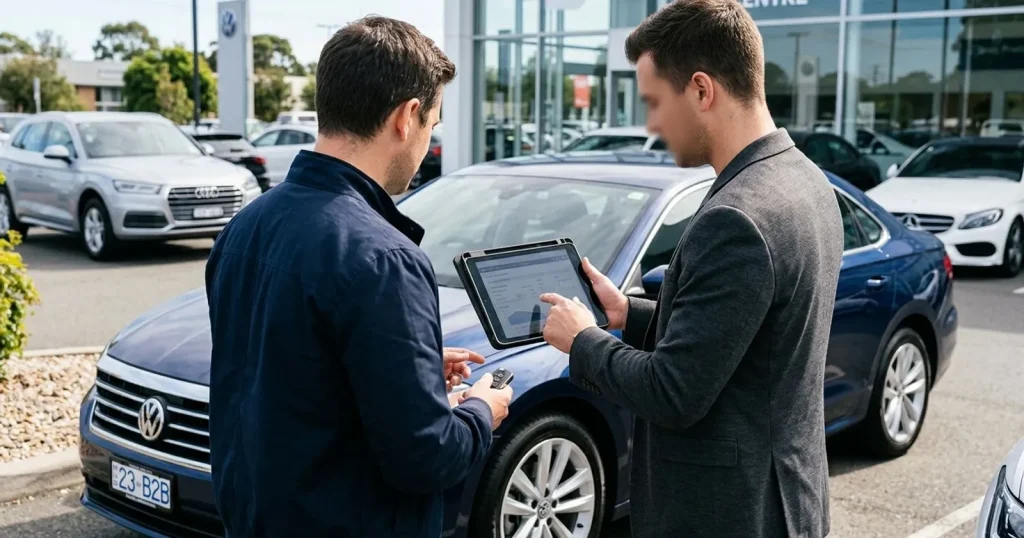
How fast can your buying desk put a real number in front of a private seller, and what does that number cost you if it's wrong? Wholesalers have no showroom, no service drive, and no trade-in line feeding them cars, so every private-party unit comes from demand they create themselves.
Private party sourcing for auto wholesalers is a speed-to-offer and offer-accuracy problem, and the wholesalers who treat it that way outbuy the ones who treat it as a listings hustle.
Before You Start
- Your typical exit channels (auction lanes, dealer-to-dealer sales) and the net proceeds you expect from each
- A target gross per unit and a walk-away rule
- Current cost per acquired unit by channel, even if it is a rough estimate
- Who handles seller contact after hours, and how long a lead waits
Table of Contents
- What Private Party Sourcing for Auto Wholesalers Really Means
- Why Wholesalers Win or Lose on Speed to Offer
- Stop Treating Marketplace Listings as a Strategy
- How to Measure and Scale a Private-Party Pipeline
- Frequently Asked Questions

What Private Party Sourcing for Auto Wholesalers Really Means
In operational terms, it means buying directly from vehicle owners through a channel you control, instead of bidding against the same buyers on an auction lane. Industry commentary now describes auction-centric strategies as a legacy model being gradually replaced by "street" acquisition from private sellers, according to Digital Dealer.
Retail dealers can fall back on a service drive and trade-ins. Wholesalers cannot, so their volume depends on paid or organic demand they own.
There are three paths:
- Marketplace listings on Facebook Marketplace, Craigslist, and OfferUp. You message sellers one at a time, and the platform owns the relationship.
- Third-party instant-offer widgets. Leads arrive fast, but the vendor often controls the data and may share the seller with competing buyers.
- A first-party seller funnel. Your landing pages, your offer flow, your lead database. Only this path gives you ownership of the lead.
Whichever path you pick, judge it against four criteria: cost per acquired unit, speed to first contact, appraisal accuracy, and exit margin. A setup that scores well on the first two but poorly on the last two is a faster way to overpay.
Why Wholesalers Win or Lose on Speed to Offer
Think of the lead-to-offer timeline as a relay with four handoffs: the seller submits a vehicle, receives a value, gets a call or text, and books an inspection. A private seller usually contacts several buyers. Each handoff that waits for a human gives another buyer a chance to reach the seller first.
Intake without a BDC
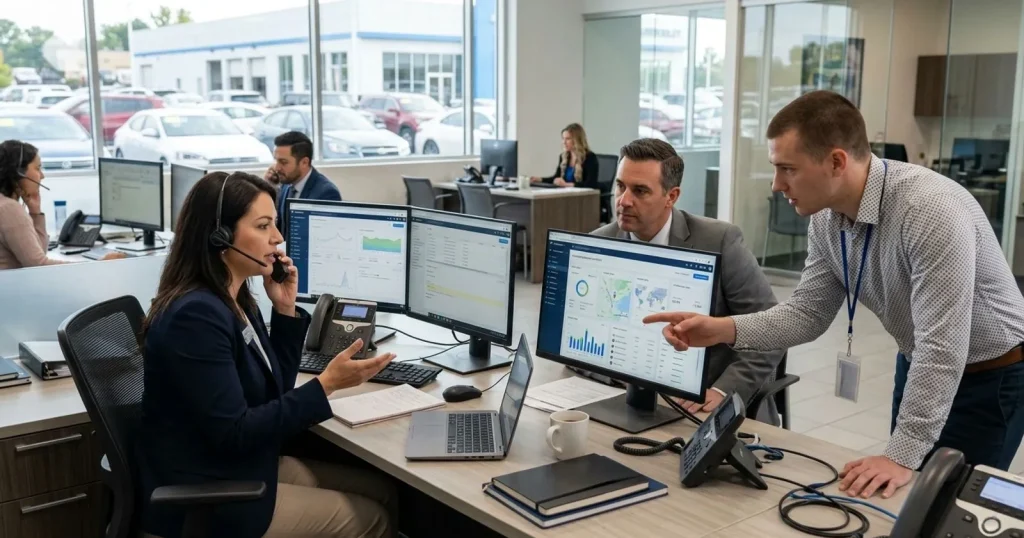
Most wholesalers cannot staff a business development center. An AI intake system covers that gap. It qualifies VIN, mileage, condition, and title status at any hour, so a human only touches leads that are already screened. The seller gets an immediate reply at 9 p.m. instead of a callback the next afternoon. For a closer look at the tradeoffs, see our comparison of dealership BDC vs AI sourcing.
An offer the seller can see
A form-fill confirmation tells the seller nothing. A custom AccuTrade API connection returns a defensible offer inside the funnel, so the seller sees a real number before anyone picks up the phone. That number must protect your margin. Work backward from expected wholesale or auction exit value, subtract your target gross, recon, and transport, and set the result as the ceiling the funnel can quote automatically.
Pro Tip: Run every private-party unit through an auction calculator before you raise a ceiling. If buying the same car on the lane nets you more after fees and transport, the private-party channel is not earning its keep on that unit.
Stop Treating Marketplace Listings as a Strategy
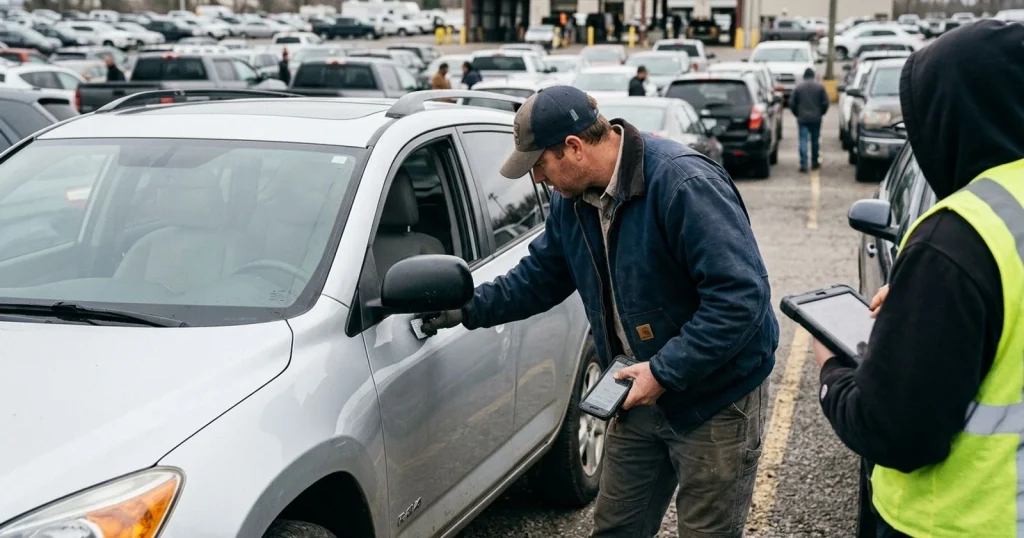
Manual marketplace outreach works for a handful of cars. At volume it breaks in predictable ways: platform account limits, sellers who ghost, asking prices anchored well above wholesale value, and no repeatable cost per unit. You cannot forecast next month's buys from a method that depends on how many messages one person can send.
A first-party funnel replaces that with a system:
- Dedicated landing pages built around seller intent
- A seller-facing offer flow that returns a number quickly
- Retargeting of sellers who start a submission and stop
- A lead database you own and can market to again
For traffic, start with Google search on "sell my car" intent, because those sellers are already ready to act. Add Meta lead campaigns once the funnel converts, and test direct mail to high-equity VINs after that. For the mechanics, see our reads on Facebook Ads for vehicle acquisition and independent dealer sourcing strategies.
Paperwork also stalls deals at pickup. Title transfer, lien payoff, and bill of sale requirements vary by state, so confirm them with your state DMV before you scale into a new market. Collect lien and title status at intake so pickup is not the first time anyone asks.
How to Measure and Scale a Private-Party Pipeline
Track four numbers every week:
- Cost per lead. Your spend divided by submissions. It tells you whether traffic is priced sensibly.
- Lead-to-appraisal rate. The share of leads that complete a vehicle submission. A low rate points at funnel friction or slow intake.
- Appraisal-to-purchase rate. The share of quoted sellers who sell to you. A low rate means your offers are uncompetitive or follow-up is late.
- Cost per acquired unit. Total acquisition spend divided by cars bought. This is the number you compare against auction buys.
When a small wholesaler moves from sporadic buys to steady monthly volume, the first bottleneck usually appears in one of three places: intake response, pickup logistics, or offer accuracy. Fix them in that order. A fast, accurate offer is wasted if nobody can collect the car. Our guide to vehicle acquisition KPIs covers how to track each stage.
Set a gross target per vehicle and a firm walk-away rule before spend grows. Volume erodes margin when buyers stretch ceilings to hit a unit count. Writing the rule down, and letting the funnel enforce it in the quoted offer, removes the temptation.
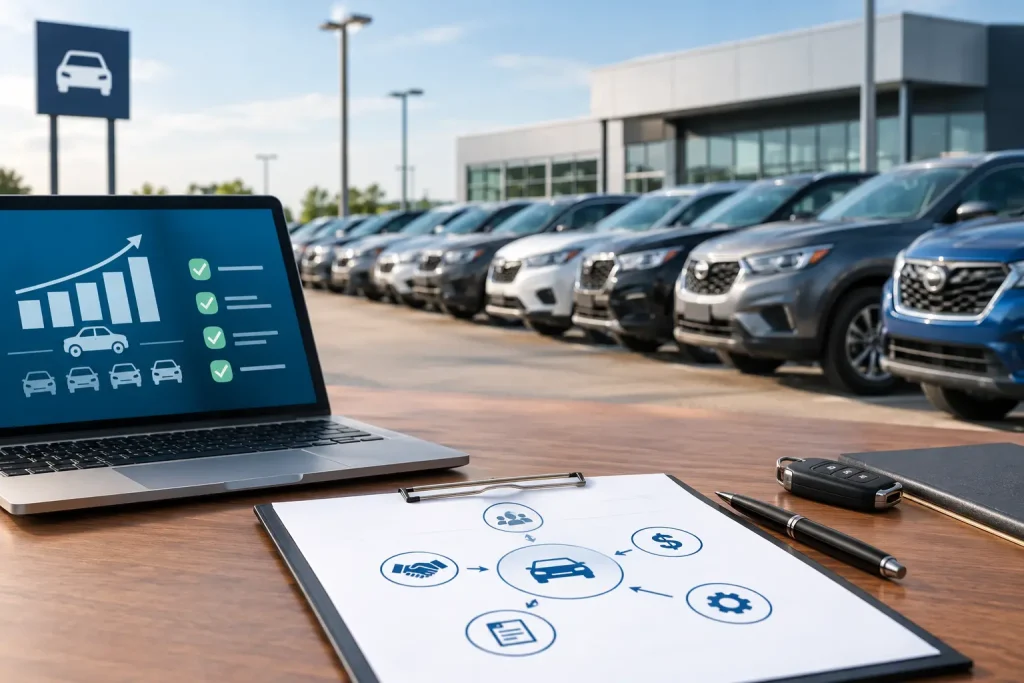
A Private-Party Acquisition Machine ties the funnel, AI intake, and appraisal into one system. Vehicquire is the only agency built 100% for private-party vehicle acquisition using custom AccuTrade API technology and first-party funnels.
Before you talk to anyone, audit your current sourcing mix and calculate cost per acquired unit for each channel.
If you want private party sourcing for auto wholesalers to run on a funnel instead of a message queue, Book a Discovery Call and we will map a funnel to your exit channels and ceiling rules.
Frequently Asked Questions
Can a small wholesaler really source cars privately without a full BDC?
Yes. An AI intake system handles first contact, qualifies VIN, mileage, condition, and title status, and replies at any hour. Your team then spends time only on screened sellers who have already seen an offer.
How much does it cost to acquire a private-party vehicle through a first-party funnel versus buying at auction?
It depends on your traffic mix and conversion rates, so no single figure applies. Calculate cost per acquired unit for each channel, then compare it against the net you expect on the lane after fees and transport. The research available does not support a universal benchmark.
Is buying from private sellers legal across states, and what paperwork changes by state?
Buying from private sellers is generally permitted, but title transfer, lien payoff, and bill of sale requirements differ by state. Check your state DMV rules and collect title and lien status at intake so pickup does not stall.
How do I avoid overpaying on private-party offers?
Work backward from expected exit value, subtract your target gross, recon, and transport, and set the result as a ceiling the funnel quotes automatically. Write the walk-away rule down before spend grows.
What kinds of vehicles work best for wholesalers through private-party channels?
Focus on units whose exit value is predictable on your channels, so your ceiling offer holds. Check each candidate against an auction calculator before buying, and let your weekly appraisal-to-purchase data show which segments earn their acquisition cost.