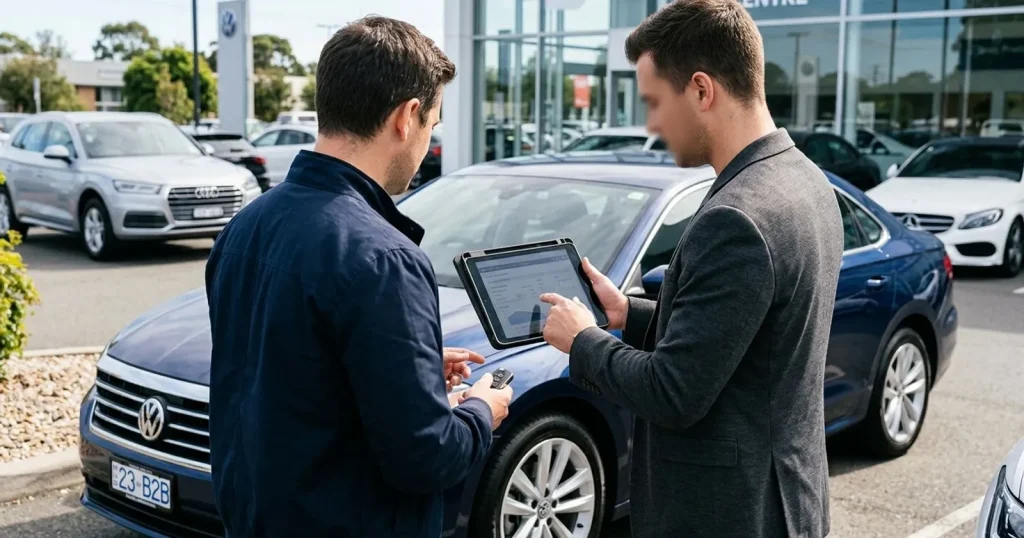
Most dealership valuation tools collect names, not cars. A shopper types in a VIN, gets a number, and the form on the other side captures an email address that your BDC will chase for three weeks before giving up. The lead looks like a lead in the CRM, but the vehicle behind it was never really on the table.
Dealers who treat vehicle valuation lead magnets for dealerships as a sourcing channel see a different result. A buying center running a first-party funnel with a live appraisal, tight intake questions, and fast follow-up can turn a few hundred monthly submissions into dozens of scheduled inspections.
The difference sits in how the offer is built: who it targets, what it asks, and how quickly a real person or an AI intake system responds.
Why do so many valuation offers stall at the form fill? The answer comes down to design choices most dealers never examine: whose vehicle gets valued, what data is captured, and whether the offer sets up a purchase conversation or a trade-in pitch. The sections below break down how to build a valuation offer that sources private-party inventory instead of padding a lead report.
Table of Contents
- Why Most Valuation Widgets Sell Instead of Source
- What a Strong Vehicle Valuation Lead Magnet Contains
- Where to Send Traffic to Your Valuation Offer
- Mistakes That Quietly Kill Valuation Lead Quality
Why Most Valuation Widgets Sell Instead of Source
A valuation offer counts as acquisition only when the person filling it out is a private seller holding a car you can buy. Everything else is retail marketing with a different label. Most dealers researching this topic want to turn an online appraisal tool into inventory, so that is the test every widget should pass.
The Placement Problem
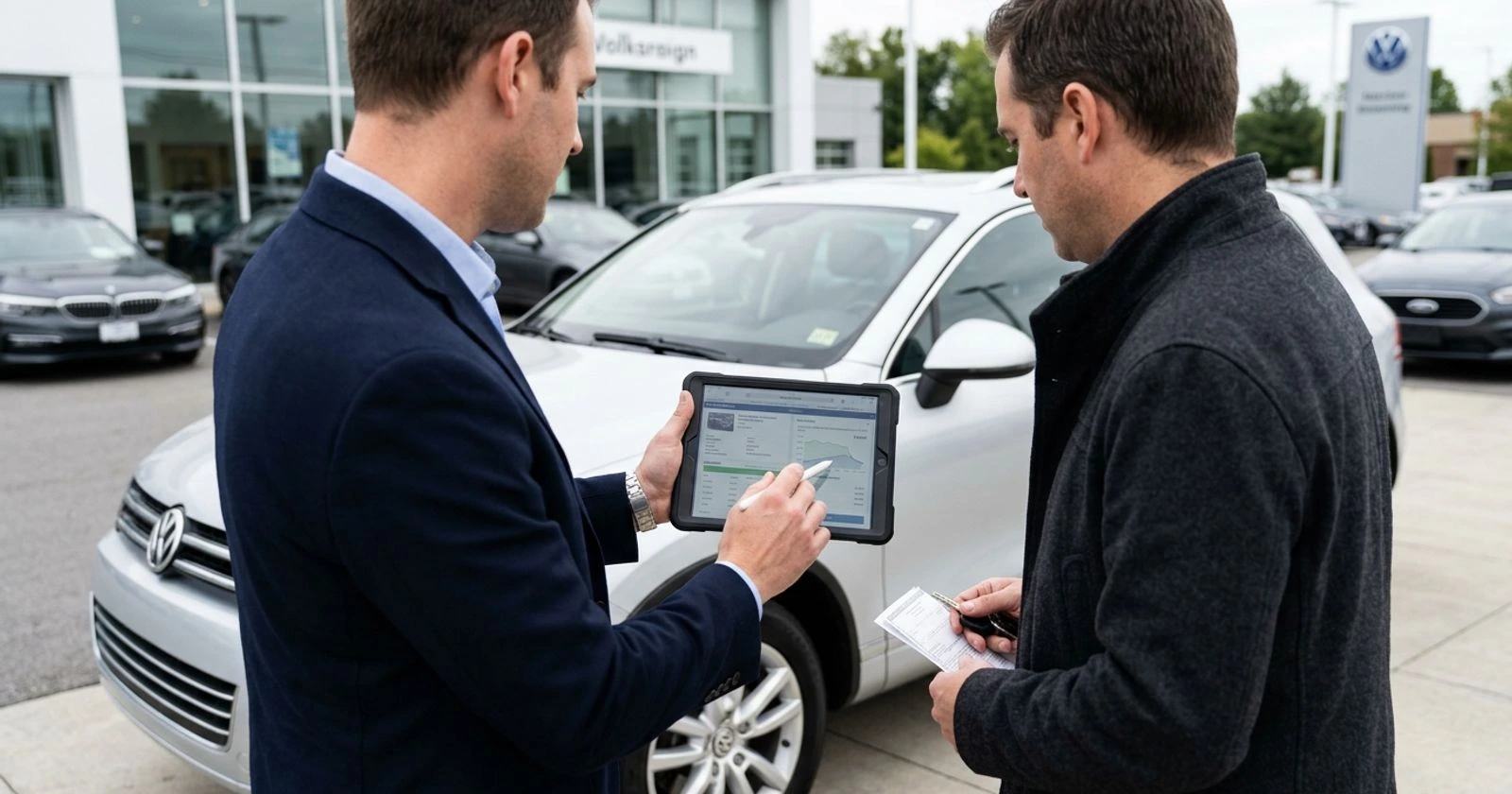
Generic guides tell you to put a "Value Your Trade" button on search results and vehicle detail pages. That placement mostly captures shoppers who are already tied to a purchase. They want trade equity applied to a car on your lot, and many never sell you the vehicle if they walk away from the deal.
Widget vs. First-Party Seller Funnel
A trade-in widget works like a fitting-room mirror: it only serves someone already shopping in your store. A first-party seller funnel is built for a different visitor entirely:
- Separate landing page. No inventory grid, no payment calculators, no shopper distractions.
- Seller-only traffic. Paid sources aimed at people who want to sell, not people browsing listings.
- Offer framing. The valuation reads as an outright cash offer, not a credit toward your next car.
That last point changes behavior the most. A seller who sees "trade credit" assumes a purchase is attached. A seller who sees a real offer treats you as a buyer.
The Standard This Article Uses
Form fills are a vanity metric. The measure that matters is purchased units, so the rest of this article tracks two rates you can borrow for your own reporting:
- Appraisal-to-appointment rate, the share of completed valuations that book an inspection.
- Appointment-to-purchase rate, the share of appointments that end in a signed deal.
Vehicquire built its system around that standard, using custom AccuTrade API technology and first-party funnels made only for private-party acquisition.
What a Strong Vehicle Valuation Lead Magnet Contains
A valuation tool that converts follows a fixed order: VIN or plate, then mileage and condition, then a value range, then contact details. Showing the range before asking for a phone number builds trust and lifts completion, because the seller gets something real before giving something up.
Gate the number only when your volume is high and your appraisers are stretched. In that case, a hard gate screens out casual browsers.
Where the Number Comes From
The valuation source decides whether the offer holds up. A retail book value invites a haggle, since the seller expects retail money. A custom AccuTrade API integration ties the figure to real market and wholesale data, so the range reflects what the car will bring. An auction calculator then checks what each unit is worth after auction fees, so every offer still clears margin.
The AI Intake Layer
Before a human touches the lead, an AI intake system should text or chat the seller within minutes. It should confirm:
- Condition and any accident history
- Title status (clean, salvage, or held by a lender)
- Payoff amount and lienholder
- Seller timeline
This keeps appraisers from spending time on cars that cannot be sold. Our AI lead intake playbook walks through the full question flow.
Fields That Separate Sellers from Tire-Kickers
- Lienholder and payoff amount: Shows whether the seller can deliver a clean title, and how much equity they have to work with.
- Ownership history: A first-owner car and a fourth-owner car are scored very differently.
- Photo upload: Anyone who takes the time to upload photos is serious, and the images let you verify condition remotely.
In my experience, sellers who complete all three fields close at a much higher rate than those who stop at the value range.
Where to Send Traffic to Your Valuation Offer
Every traffic source brings a different kind of seller, so the offer should meet each one where they are. Facebook and Google campaigns work best when they point to one dedicated valuation page rather than your homepage. Direct mail with a QR code sends cold neighbors to that same page.

Retargeting brings back people who looked at the offer and left. SEO pages catch people already typing "how much is my car worth." For setup details, see our posts on paid traffic for vehicle marketing and facebook ads vehicle acquisition.
Why a First-Party Funnel Beats a Plug-In Tool
A plug-in tool on your main site is convenient, but you give up control. A first-party funnel keeps the seller data in your hands, with no shared lead pool that competing dealers also draw from. It also gives you clean attribution by channel, so you know which source produced each appraisal. That structure is why the numbers stay clean.
Don’t Overlook the Service Drive
Your service lane already holds owners with equity. A simple valuation prompt, tied to what their vehicle is worth today, turns a repair visit into an acquisition lead. One caveat: route these leads into the same appraisal queue as every other source. If service-drive leads sit in a separate inbox, they get slower contact and lower close rates.
Respond in Minutes, Not Hours
Set a firm rule: contact every valuation lead within minutes. A valuation lead goes cold faster than a retail inquiry. A car shopper usually needs days to decide. A seller can accept another offer the same afternoon. An AI intake system that engages the seller instantly keeps you in the running while your team prepares the offer.
Mistakes That Quietly Kill Valuation Lead Quality
Most valuation funnels fail after the form fill, not before it. The lead arrives, the number looks good, and the deal still dies. Four mistakes account for most of that loss.
Quoting a Number the Appraisal Cannot Honor
A seller who sees a high or vague figure anchors on it. When your appraiser offers less, the seller feels bait-and-switched and stops answering calls. Set the displayed range using real wholesale and retail data, then widen it for condition risk rather than rounding up.
Make the top of the range something the buying center would pay for a clean unit, so a normal in-person offer lands inside the range. Custom AccuTrade API technology can feed live market data into the form so the range reflects what you will actually pay.
Letting Leads Sit in a General Queue
A valuation lead is a seller with a vehicle, not a retail shopper. Route each one to a buying center or acquisition specialist with its own follow-up cadence. In multi-rooftop groups, record one owner per lead so two stores never call the same seller.
Measuring the Wrong Thing
Cost per lead hides everything that happens next. Track cost per vehicle acquired and appointment show rate instead. Our vehicle acquisition KPIs breakdown covers the full metric set.
Skipping the Consent Check on Text Follow-Up
The TCPA applies nationwide, so your form needs clear consent language before any follow-up text. State rules vary, so have your counsel review the wording.
Vehicquire is the only agency built 100% for private-party vehicle acquisition using custom AccuTrade API technology and first-party funnels, which means these fixes are built into the system from day one. Book a Discovery Call to see how vehicle valuation lead magnets for dealerships, backed by accurate ranges, clear ownership, and compliant follow-up, could fill your buying center.
Frequently Asked Questions
Should we show the valuation range before or after collecting contact details?
Show the range first in most cases. Giving the seller a real number before asking for a phone number builds trust and lifts completion rates. Gate the number behind contact details only when submission volume is high and your appraisers are stretched, since a hard gate screens out casual browsers.
How fast should a valuation lead be contacted?
Within minutes, not hours. A seller can accept another buyer's offer the same afternoon, while a retail shopper often takes days to decide. An AI intake system that texts or chats the seller immediately keeps you in the conversation while your team prepares the in-person offer.
Do we need a separate landing page, or can the widget on our main site work?
A separate seller-only page performs better for sourcing. A widget on your main site draws shoppers who want trade equity toward a car on your lot, and many of them never sell you the vehicle. A dedicated page with no inventory grid or payment calculators draws private sellers, and it also gives you clean attribution by traffic source.
What should we track to know if the funnel is working?
Track cost per vehicle acquired and appointment show rate rather than cost per lead. Two rates tell you where the funnel leaks: appraisal-to-appointment rate (completed valuations that book an inspection) and appointment-to-purchase rate (appointments that end in a signed deal). Cost per lead alone hides everything that happens after the form fill.
What consent do we need before texting valuation leads?
Your form needs clear consent language before any follow-up text, because the TCPA applies nationwide. State rules vary on top of that, so have your counsel review the exact wording before you launch the funnel.