Most acquisition desks treat a seller who owes more than the car is worth as a dead lead. The credit data says that is a mistake. Cox Automotive reports the October Dealertrack Credit Availability Index reached 107.1, 8.9% higher than a year earlier, and more of those loans are underwater.
Helping private sellers finance negative equity is a core buying skill that keeps profitable units out of the auction lane. The dealers who win treat every upside-down seller as a documented decision: buy, route, defer, or decline.
Vehicquire builds acquisition funnels around that decision, so the gap is visible before anyone spends time on an appraisal.
Before You Start
Four pieces need to be in place before you work underwater trade-ins at volume. Without them, each deal gets solved from scratch.
- A written payoff process for each major lienholder you see
- A defensible acquisition value source, such as AccuTrade
- A named owner for payoffs and title tracking in your CRM
- Agreement with your finance manager on when a lead moves to their desk
Table of Contents
- Before You Start
- Is an Underwater Seller Still Buyable?
- Capture Payoff Data Before Appraisal Time
- Helping Private Sellers Finance Negative Equity Ends in Four Outcomes
- Close the Deal Without Title Surprises
- Frequently Asked Questions
Is an Underwater Seller Still Buyable?
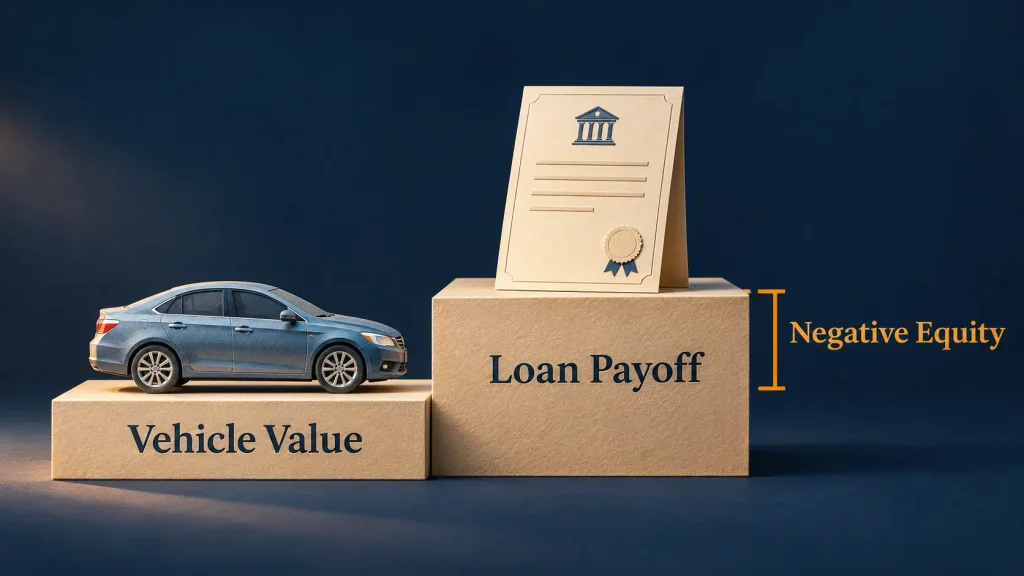
Yes, if three conditions hold. The gap is documented, the seller can cover it, and the vehicle still pencils at exit. The seller pays the difference at every stage. The dealer never absorbs it through a quiet adjustment to the offer or the next deal.
These sellers are everywhere. Cox Automotive’s October Dealertrack Credit Availability Index showed 58.7% of loans with negative equity, up 490 basis points from 53.8% a year earlier. Loans longer than 72 months stayed above 31% for a fifth straight month. Long terms keep payments low but slow equity build.
That upside-down loan inventory lands in your private-party volume every week, much like a service lane full of declined repairs waiting for a process to convert them.
Separate the Five Numbers
Stop blending everything into one “can we do it” number. Track five figures on their own:
- Lender payoff, taken from a written quote
- Defensible acquisition price, based on market data
- Seller cash contribution, verified, not promised
- Replacement-vehicle financing, if the seller wants another car
- Projected exit economics, retail or wholesale
Take a $28,500 payoff against a $25,500 acquisition offer. The seller has a $3,000 shortfall. Helping means you explain that gap, accept a documented contribution, and offer a replacement path if it fits. You never hide the gap or promise the debt disappears.
Capture Payoff Data Before Appraisal Time
Most dealers learn about the payoff at the desk, after a buyer has spent an hour on the car. Flip that order. A negative-equity track inside your First-Party Lead Funnels collects lien data at submission. Custom AccuTrade API Technology returns a market-based value at the same moment.
The Intake Fields That Matter
AI Intake Systems should store these as structured fields that reports can filter:
- VIN, mileage, and condition
- Lienholder name and lender-specific payoff method
- Payoff amount and payoff expiration date
- Title location, electronic or paper, and which state holds it
- Seller funds available for the gap
- Replacement intent
Two fields drive close timing more than the rest. An expired payoff quote means a new quote and a reset clock. Title location tells you whether release is electronic or a paper title mailed by the lender. Paper titles add days you cannot control, and some state DMVs process them slower than others.
When the AccuTrade value lands below the stated payoff, the AI flags the gap right away. Then it asks what a good buyer would ask. Can you bring funds to cover the payoff difference? Would you like to look at another vehicle? It collects answers without promising approval, payoff, or financing. Our ai lead intake playbook covers how to script those follow-ups.
Answer the questions sellers actually type, such as “Can I sell my financed car privately if I can’t pay the gap in cash?” The honest reply is that the lender must be paid before the title releases.
The Wall Street Journal’s guide on how to sell a car with a loan lays out the same sequence. Stating this up front pre-qualifies sellers and filters out leads that would have burned an appraisal.
Helping Private Sellers Finance Negative Equity Ends in Four Outcomes
Every underwater lead gets one route. The triggers are simple comparisons, not gut feel.
- Buy when verified seller funds cover the gap and the all-in cost beats your auction alternative.
- Defer when the vehicle pencils but the seller cannot fund the gap yet. Set a follow-up date in the CRM.
- Refer when the seller wants a replacement vehicle and cannot cover the gap. That lead goes to finance.
- Decline when the gap is large and the exit value would not justify the work even with funds.
Compare Against the Auction Lane
Run the Auction Calculator before deciding. Enter transport, auction fees, reconditioning, days-to-sale, expected wholesale value, and retail gross for a similar unit. A seller with thin equity can still be a strong buy when your all-in private-party cost beats buying the same car at Manheim or ADESA. Our breakdown of auction vs private party costs shows where that line usually falls.
Gross is only half the picture, so weigh it against carrying risk. Title delays push out days-to-sale. A seller who promised $3,000 and shows up with nothing stalls the deal entirely. Track both rates by rooftop so risk shows up in data rather than anecdotes, and add them to your vehicle acquisition kpis.
Pro Tip: Log the reason for every defer and decline. Patterns in lost-lead reasons show whether your offers, your payoff process, or your seller mix is the real problem.
Rolling Negative Equity Belongs to Finance
Sellers will ask, “Will you roll my negative equity into another car?” Some lenders allow it, but be plain about the cost. The new loan carries a larger balance, and the seller pays interest on old debt.
They start the next car further underwater, a pattern CNBC Select describes in its guide to getting out of an upside-down car loan. That conversation involves credit decisions and Truth in Lending Act disclosures, so it routes to the finance team.
Close the Deal Without Title Surprises
A close that lives in one buyer’s memory will fail eventually. Name an owner for each step:
- Acquisition manager verifies seller funds are certified and cleared.
- Title clerk confirms the payoff quote is current and sends the payoff by the lender’s written method.
- Title clerk logs payoff confirmation and title status in the CRM.
- Acquisition manager releases the vehicle to recon only after funds and payoff clear.
When the Lender Holds the Title
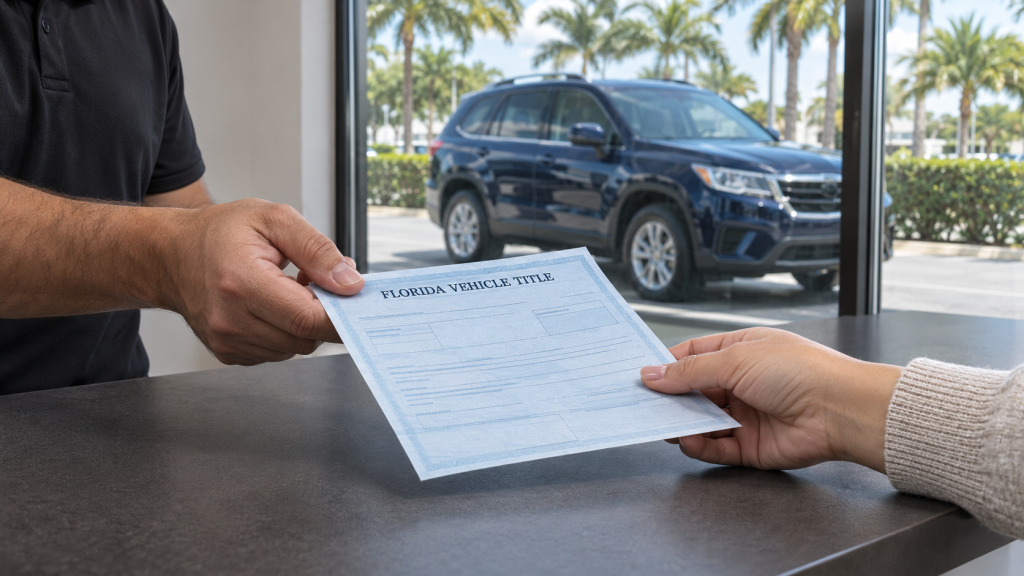
Some lenders release titles slowly. Hold the vehicle, the payoff confirmation, and a signed power of attorney where your state allows it. Have the seller sign a written acknowledgment of the gap they covered. Escalate to the lender once your internal threshold passes, then to a manager. Never promise a title-release date, because you do not control it.
What to Say to the Seller
Keep the script plain: “Your lender’s payoff is $28,500. Our offer is $25,500. The $3,000 difference has to be paid before your lender releases the title. We can’t erase it, but we can walk you through your options.”
When a seller asks if someone can take over their payments, tell the truth. Informal takeovers leave the original borrower liable to the lender. Avoid presenting GAP coverage as a fix either, since it generally covers total loss or theft rather than a voluntary sale.
Pro Tip: Give multi-rooftop groups one exception policy, one payoff owner per store, and one title escalation ladder. Consistency matters more than any single rule.
Standardizing those three items lets a Private-Party Acquisition Machine treat underwater sellers the same way at every buying center. Vehicquire is the only agency built 100% for private-party vehicle acquisition using custom AccuTrade API technology and first-party funnels.
Helping private sellers finance negative equity then becomes a repeatable process instead of a desk-by-desk guess. Book a Discovery Call to see how a negative-equity funnel would sort your current lead flow into clear buy, route, and decline decisions.
Frequently Asked Questions
Can a dealer buy my car if I owe more than it’s worth?
Yes, if you cover the difference between the payoff and the offer. The dealer pays the lender, and you bring certified funds for the gap. The lender releases the title once the loan is paid in full.
Can I sell my financed car privately if I can’t pay the gap in cash?
Not cleanly, because the lender holds the title until the loan is paid off. Some sellers wait, while others trade into a replacement vehicle through a finance department. Ask for the full cost of each option in writing.
Can someone else take over my car payments?
Informal takeovers leave you legally responsible for the loan. If the other person stops paying, the lender comes after you. Only a lender-approved transfer or full payoff ends your liability.
Does GAP insurance cover negative equity when I sell?
Generally no. GAP coverage typically applies to a total loss or theft, not a voluntary sale. Review your contract terms with the provider before counting on it.